Unrestricted Warfare es un interesante libro escrito por 2 coroneles chinos (Qiao Liang y Wang Xiangsui) miembros del PLA que describe cómo combatir un enemigo superior mediante diferentes tipos de guerra (económica, informática, política, etc.) y no la forma tradicional en la historia de la humanidad. La obra original en chino fue traducida al inglés por el FBIS en 1999 y en su momento causo tensión ya que se entendió como una llamada a las armas contra EE.UU., aunque en ningún momento fue la intención de los autores. Cabe destacar que la Academia Naval de los EE.UU. solicitó permiso a los autores para utilizarlo en su temario.
Unrestricted Warfare is an interesting book written by two Chinese colonels (Qiao Liang and Wang Xiangsui) members of the PLA that describes how to combat a superior enemy through different types of war means (economic, computer science, politics, etc.) and not by the traditional way in mankind history. The original work in Chinese was translated into English by the FBIS in 1999 and eventually caused tension because it was understood as a call to arms against the United States but was not the intention of the authors. Highlight that the United States Naval Academy did ask permission to the authors to use it as their official textbook.
El libro, que se puede comprar (ISBN 978-0971680722) o bajar gratis de Internet. A través de sus 8 capítulos (228 paginas la edición que he leído) nos describe distintas formas de obtener la victoria frente a un enemigo tecnológicamente superior con multitud ejemplos reales de la década de los 80 y 90. Los autores con una acertada visión del futuro en el libro relatan posibles acciones militares que suceden en la década del 2000 y que es posible que sigan sucediendo durante décadas.
You can buy the book (ISBN 978-0971680722) or get free copy on Internet. Through its eight chapters (228 pages the edition that I read) it describes different ways to obtain victory versus a technologically superior enemy with many real examples of the decade of the 1980s and 1990s. The authors with an accurate vision of the future in the book describe possible military actions which will occur in the 2000s and may continue for decades.
Algunos métodos alternativos de guerra son:
Política
Económica
Ciberguerra
Terrorismo
Some alternative methods of war are:
Politics
Economics
Information Warfare (IW)
Terrorism
Los autores describen con gran detalle y ejemplos reales los métodos alternativos que se pueden utilizar en un conflicto. Aunque dejan claro que para ganar el conflicto no sólo debemos entender y manejar estas alternativas, sino que debemos combinarlas para ser más efectivas. Sin una correcta combinación siempre estaremos condenados a la derrota.
The authors describe alternative methods that you can use in a conflict with great detail and real-life examples. Although to win the battle not only we need to understand and manage these alternatives but have to combine them to be more effective. Without a correct combination of war means we are doomed to be defeated always.
Como curiosidad en el libro hablan sobre personajes significativos en los últimos tiempos como Bill Gates, George Soros, Osama Bin Laden, Norman Schwarzkopf , Colín Powell y muchos más. También incluye referencias a la historia China como su filosofía, dinastías y guerras.
En mi opinión un libro de lectura obligatoria por diferentes motivos como son por el trabajo de investigación que han realizado los autores encajando las piezas del puzzle, por los tiempos que corren de ciberguerra (aunque no es manual de ciberguerra), para aquellos interesados en historia militar y por último porque es gratis, que más se puede pedir!
In my opinion a required reading for different reasons such as the research done by the authors fitting the pieces of the puzzle, by the times of Information Warfare (but is not an Information Warfare manual), for those interested in military history and last but not least because it is free, what else you can ask for!
Puntación (1 rosa, muy malo / 5 rosas, muy bueno): 5 Rosas (Lectura Obligatoria)
Score (1 rose, very bad / 5 roses, very good): 5 Roses (Mandatory Reading)
Para ser una plataforma basada en Linux (kernel 2.6), que se considera segura y libre de virus (aunque ambas afirmaciones son falsas), en el Market de Android podemos encontrar diversos paquetes que combinan seguridad de la plataforma y antivirus. He contado 17 productos tanto gratis como comerciales y estoy seguro que aún quedan muchos por identificar.
To be a platform based on Linux (kernel 2.6), which is considered secure and virus-free (although both statements are false), in the AndroidMarket we can find several packages that combine platform security and anti-virus. I have counted 17 products both free and commercial and I am sure there are still many more.
Aquí os pongo el listado de productos y sus fabricantes:
MyAntivirusPro (PerlApps)
PhoneGuard (PhoneGuard)
AntiVirus (Andro Security)
Scan & Shield Anti-Virus (ProApptive)
Virus Eater (DCVS)
Antivirus for Android (NetQin Mobile inc)
Antivirus Pro AVG (AVG DroidSecurity)
Dr Web Anti-Virus (Doctor Web, Ltd)
Risk Detector – MobileSecurity (EasyFilter)
DroidSafe (DMA)
SmrtGuard Mobile Security (SmrtGuard)
MyMobile Protecion (MyMobile Security)
MobiShield (Trustmobi)
Webroot Mobile Security (Webroot Software Inc)
SecuritySuite (DroidHunter Security)
AppScan Beta (Aegislab)
Norton Mobile Security (NortonMobile)
Here you get the list of products and their vendor:
MyAntivirusPro (PerlApps)
PhoneGuard (PhoneGuard)
AntiVirus (Andro Security)
Scan & Shield Anti-Virus (ProApptive)
Virus Eater (DCVS)
Anti-virus for Android (NetQin Mobile inc)
Antivirus (AVG DroidSecurity) AVG Pro
Dr. Web Anti-Virus (Doctor Web, Ltd)
Risk Detector – MobileSecurity (EasyFilter)
DroidSafe (DMA)
SmrtGuard Mobile Security (SmrtGuard)
MyMobile nanotechnology (MyMobile Security)
MobiShield (Trustmobi)
Webroot Mobile Security (Webroot Software Inc.)
SecuritySuite (DroidHunter Security)
AppScan Beta (Aegislab)
Norton Mobile Security (NortonMobile)
Si la plataforma Android (Linux) se considera segura, ¿por qué encontramos tantos paquetes de seguridad que afirman proteger nuestros dispositivos de virus y otras amenazas? Algo huele a podrido en Dinamarca…
If the platform Android (Linux) is considered so secure, why do we find so many security packages claiming to protect our devices from viruses and other threats? Something is rotten in the state of Denmark…
Ni Linux o Android son más seguros como muchos supuestos profesionales de seguridad creen equivocadamente, ni están exentos de virus/gusanos como otras plataformas. Por ejemplo este verano se identificó el primer malware (no es un virus realmente) para Android que funciona para los dispositivos en redes rusas, ya que el programa malicioso envía SMS a números de pago rusos (Trojan-SMS.AndroidOS.FakePlayer.a). Y este año en diversas conferencias de seguridad se han publicado los primeros troyanos públicos para Android utilizando Loadable Kernel Module (LKM), una vieja técnica para entornos Linux.
Neither Linux nor Android are more secure as many alleged security professionals believe wrongly, or are exempt from viruses/worms as other platforms. For example this summer was discovered the first malware (not really a virus) for Android that works for devices in Russian networks because the malware sends SMS to Russian premium numbers (Trojan-SMS.AndroidOS.FakePlayer.a). And this year at various security conferences it was released the first public Trojans for Android using Loadable Kernel Module (LKM), an old technique for Linux environments.
La razón porque otras plataformas tienen más virus es simplemente por la economía de escala y no por su inseguridad, ya que desarrollar virus o gusanos que aprovechen vulnerabilidades es un gasto de recursos (humano, tiempo y económico). Uno de los últimos ejemplos lo tenemos en el gusano Stuxnet, toda una ingeniera de software ofensivo.
The reason why other platforms have more viruses is simply by economies of scale and not insecurity, given that to develop viruses or worms that exploit vulnerabilities consume a lot of resources (human, time and economic). One of the latest examples we have is the worm Stuxnet, a fabulous piece of offensive software.
Android es una interesante tecnología con un potencial de crecimiento como se puede apreciar en la venta de teléfono Smartphones en el mercado americano, donde ya adelanta a IPhone o BlackBerry como la plataforma más vendida con una cuota de mercado del 44%. Y con su naturaleza Open Source preveo que será una de las plataformas favoritas de los atacantes, para mí ya lo es ;)
Android is an interesting technology with a growth potential as you can see in the sale of Smartphones in the American market, where is ahead of IPhone or BlackBerry as the best-selling platform with a market share of 44%. With its Open Source nature I foresee that it will become a favorite platform for attackers, for me it already is ;)
Así que sólo es cuestión de tiempo que veamos muchas más amenazas y virus en todas las plataformas móviles, ya que al fin y al cabo estamos llevando un potente dispositivo en el bolsillo conectado constantemente a Internet por wifi y/o 3G. Desarrollo de exploits, ataque a ordenadores, otros dispositivos o la Nube, Botnets, etc. y todo desde smartphones, y esto es sólo el principio…
A los atacantes se les está abriendo un mundo nuevo de posibilidades :)
Qué piensas de la seguridad y las amenazas en los Smartphones?
It is only a matter of time before we see many more threats and viruses across all mobile platforms, after all we have a powerful device in ours pockets that is constantly connected to Internet by Wifi and/or 3G. Exploit development, attacks to computers or other devices or even the cloud, Botnets, etc., it is just the beginning for Smartphones hacking…
To attackers is a new world of possibilities :)
What do you think of security and threats on Smartphones?
Recientemente me llegó el Bus Pirate (v3 de Sparkfun) considerado la navaja suiza de hardware hacking. Este dispositivo es un interfaz bus universal que permite comunicarse con la mayoría de chips desde el PC y que agiliza la creación de prototipos o para otros usos ;)
Recently I got a Bus Pirate (Sparkfun v3), considered the Swiss army knife of hardware hacking. This device is a universal bus interface that allows communication with the most chips from PC speeding up the creation of prototypes or other uses ;)
La mayoría de Bus Pirate no suelen tener la última versión de firmware por lo que en este post explicaré de forma detallada cómo actualizarlo (en mi caso he actualizado a la 5.10). Se recomienda actualizar el firmware ya que trae importantes mejoras como por ejemplo el “binary access mode”, que nos permite utilizar Python u otros lenguajes con el Bus Pirate.
Most Bus Pirate do not have the latest version of firmware, therefore in this post I will explain in detail how to update it (in my case I upgraded it to the 5.10 version). Upgrading the firmware is recommended because it brings significant improvements as for example the “binary access mode” that allows us to use Python or other languages to communicate with the Bus Pirate.
Antes de nada debemos leer las instrucciones sobre actualización de firmware en Dangerous Prototypes (la web oficial), ya que tendremos que hacer una serie de pasos allí descritos. Para actualizar la versión firmware de 2 o 3 a la versión 4 hay que utilizar el método antiguo (uso de jumper). A partir de la versión 4 la actualización de firmware es mucho más sencilla como veremos en el post.
First of all we must read the documentation for update firmware on Dangerous Prototypes (the official website) since we have to do a series of steps described there in great length. To update version firmware 2 or 3 to version 4 we need to use the old method (use of a jumper). From version 4 firmware upgrade is much easier as we will see in the post.
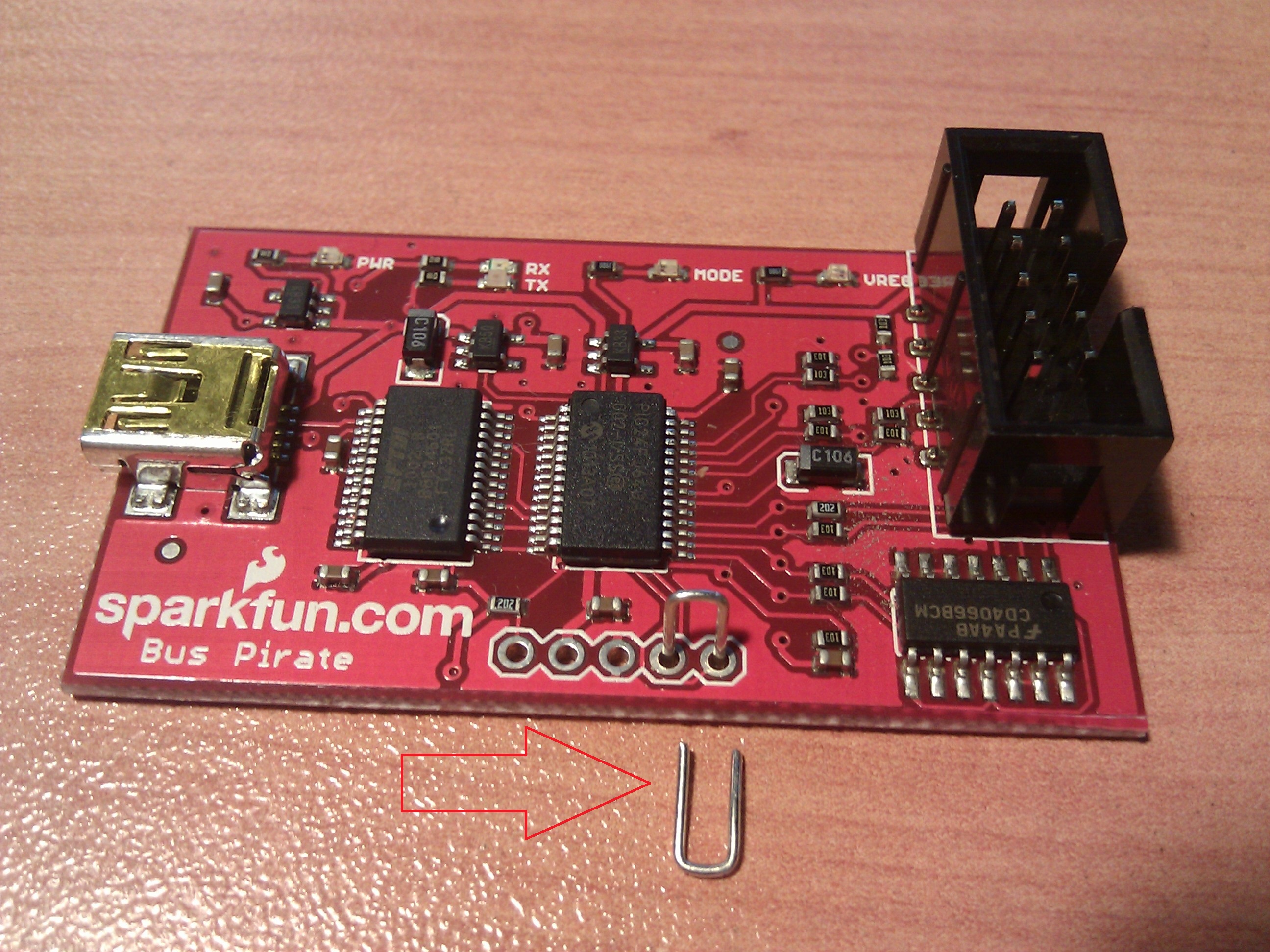
Fig. 1 – Bus Pirate y dos Jumpers (Uno de ejemplo y otro en los pins PGC y PGD) / Bus Pirate and two Jumpers (one as a sample and another connected on GCP and PGD pins)
En la Fig. 1 vemos el Bus Pirate y dos jumper, uno a modo de ejemplo y otro conectado a los pins PGC y PGD para entrar en el modo actualización. Una vez que hayamos metido el jumper en los pins correspondientes debemos enchufar el Bus Pirate mediante USB.
Es el momento de actualizar nuestro gadget :)
We see in the Fig. 1 the Bus Pirate and two jumpers, one as a sample and the other connected to the pins PGC and PGD to enter the update mode. Once you have gotten the jumper in the corresponding pins, plug the Bus Pirate to the USB.
Time to update our gadget :)
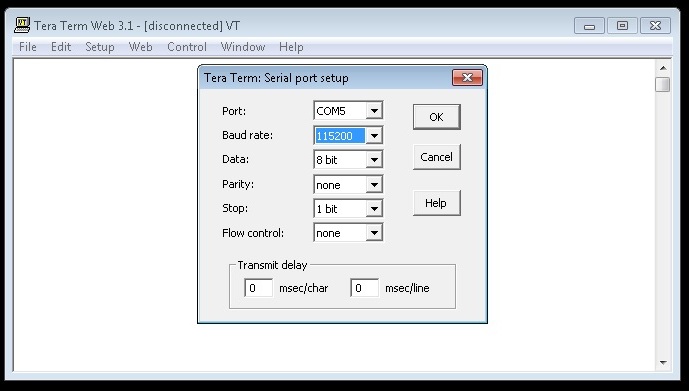
Fig. 2 – Selección de puerto y velocidad / Port and speed selection
Como en la Fig.2 ejecutamos el Tera Term Web (el programa recomendado para comunicarse con el Bus Pirate y es gratis :) ) y debemos seleccionar el puerto COM (COM5 en mi caso) y la velocidad de transferencia a 115200.
As Fig.2 we run Tera Term Web (the recommended serial terminal to communicate with the Bus Pirate and is free :) ) and we must select the COM port (COM5 in my case) and the set the transfer rate to 115200.
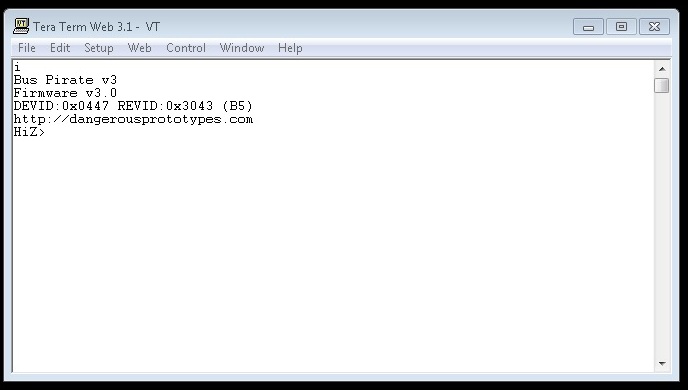
Fig. 3 – Bus Pirate en acción / Bus Pirate in action
Si todo está correcto podemos comunicarnos con el Bus Pirate (Fig. 3). En la terminal he escrito el comando “i” para ver el status y podemos ver que la versión del firmware es la 3.
If everything is correct we can communicate with the Bus Pirate (Fig. 3). In the terminal I have typed the command “i” to see the status and we can see that the firmware version is 3.
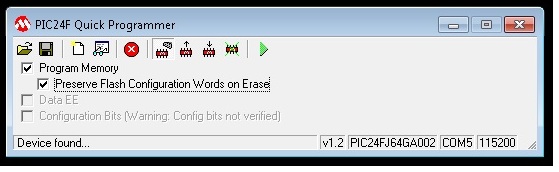
Fig. 4 – Ejecutar P24QP.exe / Run P24QP.exe
Según las instrucciones de Dangerous Prototypes (que debemos leer antes de seguir este post) ahora debemos ejecutar el bootloader (P24QP.exe) como vemos en la Fig. 4 y debemos seleccionar puertos y velocidad para comunicarse con el Bus Pirate. (Barra de estado)
As from Dangerous Prototypes documentation (which we should read before continuing with this post) we now run the bootloader (P24QP.exe) as we see in Fig. 4 and we must select ports and speed to communicate with the Bus Pirate. (Status bar)
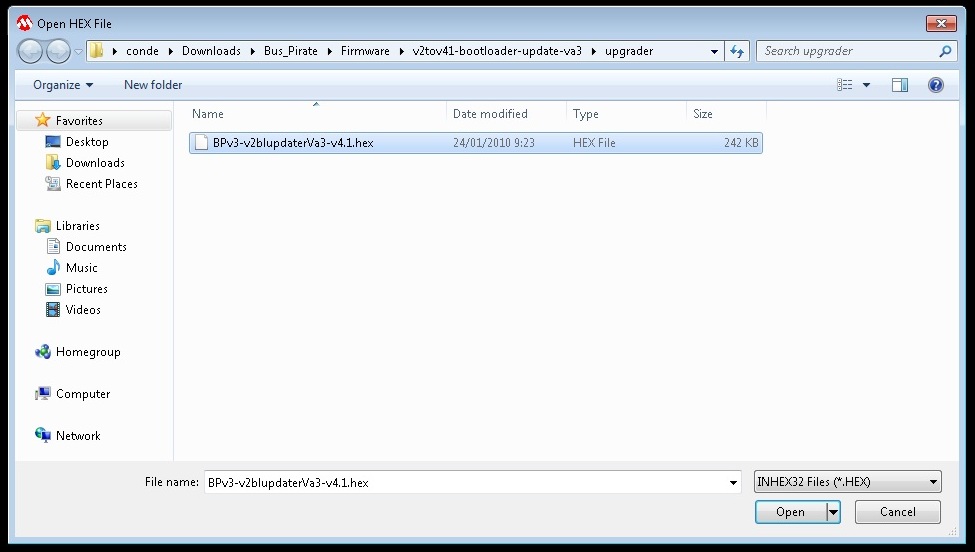
Fig. 5 – Seleccionar el fichero hex / Select the hex file
En la Fig. 5 seleccionamos el fichero BPv3-v2blupdaterva3-v4.1.hex
As Fig. 5 we now select file fichero BPv3-v2blupdaterva3-v4.1.hex
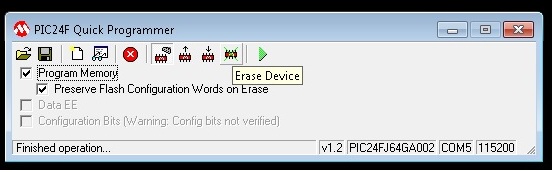
Fig. 6 – Elegimos opción Erase para borrar el viejo firmware / Select Erase option to delete old firmware
En la Fig. 6 le damos al botón de Erase Device para borrar el viejo firmware. Si no hacemos esto el nuevo firmware no funcionara correctamente.
As Fig. 6 we click on the Erase Device button to delete the old firmware. If we don’t do this the new firmware would not work correctly.
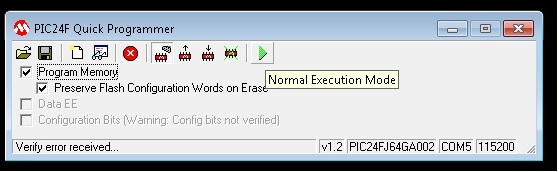
Fig. 7 – Escribimos el nuevo firmware / Now write the new firmware
En la Fig. 7 ya comenzamos a escribir el nuevo firmware en el Bus Pirate. Primero le daremos a “Write Device” y cuando termine pulsamos en “Normal Execution Mode”.
As show in Fig. 7 we already begin to write the new firmware in the Bus Pirate. First we will click on “Write Device” button and when is finished click on “Normal Execution Mode” to write the firmware.
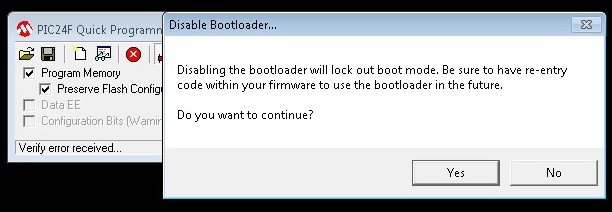
Fig. 8 – mensaje de advertencia / Warning message
Al terminar el proceso de escritura nos saldrá una ventana de advertencia (Fig. 8 ), le decimos que “yes”. Podemos desconectar el Bus Pirate ya que debemos quitar el jumper para el siguiente paso, aunque después volveremos a meter en jumper.
At the end of the process of writing a warning window will pop up (Fig. 8 ) so just click “yes”. We now disconnect the Bus Pirate as we have to remove the jumper for the next step, though later we will insert the jumper again.
Fig. 9 – Ejecutamos la actualización / Execute update
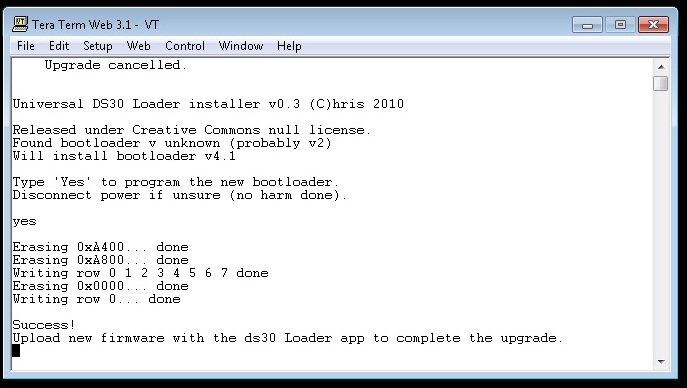
Ahora quitamos el jumper de los pins (PGD Y PGC) y conectamos el Bus Pìrate, abrimos la terminal y nos debería salir la Fig. 9. Escribimos “yes” y el firmware se actualizará.
Now remove the jumper from the pins (PGD and GCP) and connect the Bus Pìrate back, open a terminal and write “yes” for the firmware update process to begin. (Fig. 9)
Fig. 10 – Ejecutamos Ds30 / Run Ds30
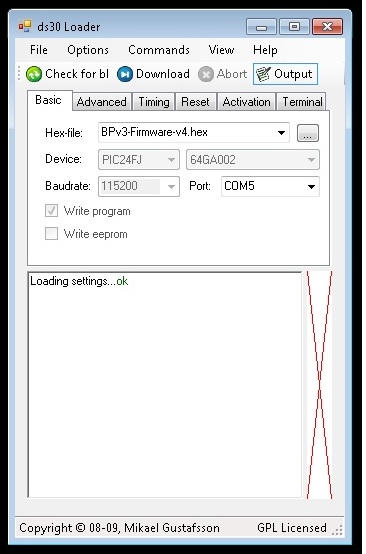
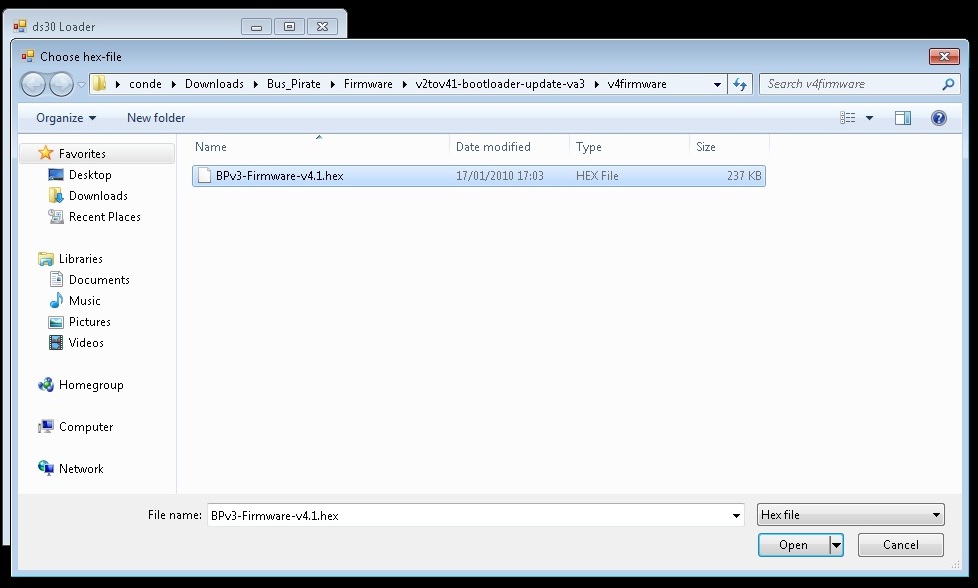
Para el siguiente paso ejecutamos el Ds30 Loader (antes tenemos que desconectar el Bus Pirate, volver a poner el jumper en los pins PGC y PGD y volver a conectar), debemos configurar la comunicación con el Bus Pirate (puerto COM) y le damos a “Hex-file” para seleccionar el fichero hex.
For the next step we need to execute the Ds30 Loader (before we must disconnect the Bus Pirate, put the jumper on pins PGC and PGD and connect again), we must configure the communication with the Bus Pirate (COM port) and we must click on “Hex-file” to select the hex file.
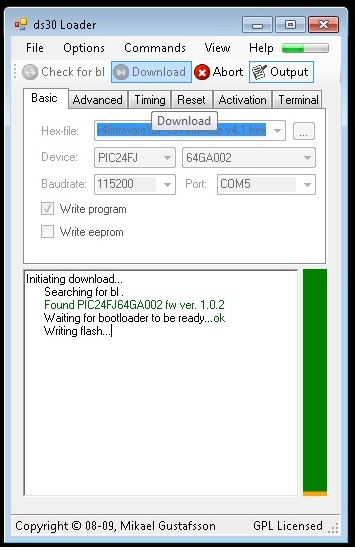
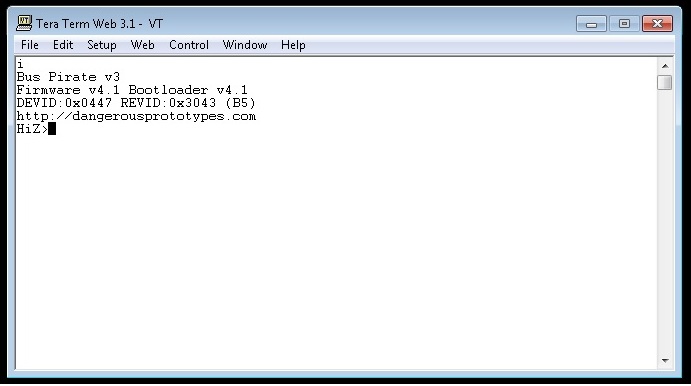
Si todo está bien ya tenemos actualizado el Bus Pirate al firmware 4.1 y que a partir de ahora será más fácil de actualizar (no hará falta el jumper) ya que se podrá hacer desde la terminal. Como existe una versión más nueva del firmware (v5) vamos a seguir actualizando pero es necesario pasar por la v4 antes de la v5 si tenemos las v2 o v3 del firmware.
If everything is OK we have updated the Bus Pirate to firmware 4.1 and from now on it will be easier to upgrade (no need for the jumper anymore) as the upgrade can be done from the terminal directly. As there is a newer firmware version (v5) we will continue to update but it is necessary to pass through the v4 upgrade before the v5 if we have the v2 or v3 firmware.
Fig. 14 – Ejecutamos “$” en la terminal / Type “$” on the terminal
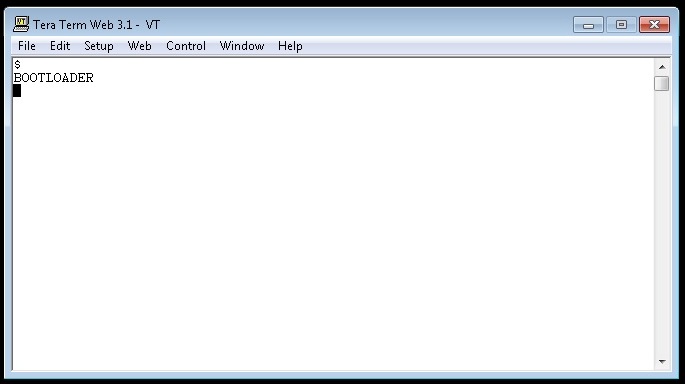
Como mencione anteriormente las actualizaciones son más sencillas, basta que ejecutemos en la terminal el comando “$” para activar el modo de actualización. Ver Fig. 14.
As previously mentioned the updates are simpler, just run the “$” command in the terminal to activate the update mode. See Fig. 14.
Fig. 15 – Seleccionamos el hex v5 / Select v5 hex
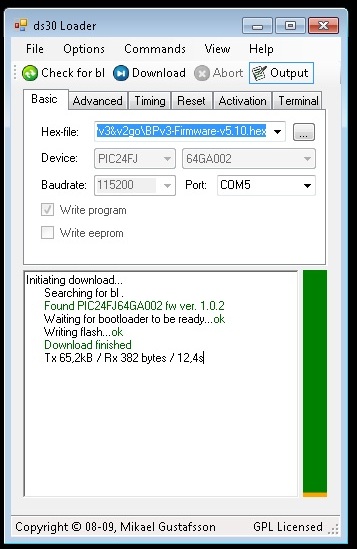
Volvemos a ejecutar el Ds30 Loader (sin necesidad de los jumpers) y seleccionamos la última versión del firmware. En mi caso he actualizado a la versión 5.10 disponible desde el 19 de noviembre.
Again run the Ds30 Loader (without the jumpers) and select the latest version of firmware. In my case I have updated to version 5.10 available since November 19.
Fig. 16 – Último firmware disponible (v5.10) / Latest firmware available (v5.10)
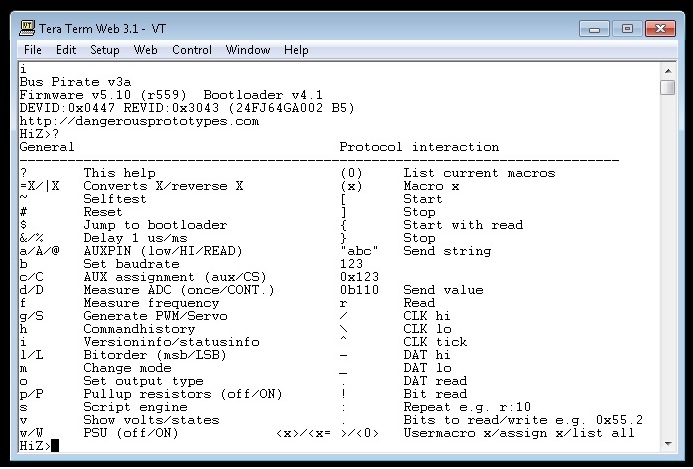
Ahora ya tenemos el último firmware disponible para el Bus Pirate. Momento de hackear :)
Realmente actualizar el Bus Pirate no es complicado pero requiere seguir los pasos y tener un jumper a mano o por lo menos otro material conductor. Y ahora para actualizar ya sabemos que sólo debemos seguir los pasos a partir de la Fig. 14 siempre y cuando tengamos como mínimo la versión 4 del firmware.
¿Tienes algún proyecto chulo con Bus Pirate?
Now we have the latest firmware available for the Bus Pirate. Time to hack :)
Actually updating the Bus Pirate is not complicated, but requires some steps and having a jumper at hand or at least another conductive material. And from now on to update we just follow the steps from Fig. 14 provided we have at least firmware version 4 or later installed.