Few weeks ago the media did publish that the US Air Force has classified 6 tools as cyber weapons, no doubt a hot topic. For this post I will do the same and put a list of 10 tools that could be Cyber weapons, my list.
My selection is based in the following criteria: its usefulness, features and open source or free at least.
Logically there are more tools that I like or that I use, but I think that this list is a great collection to carry out attacks in networks and systems, reverse engineering, traffic analysis, social engineering, vulnerability discovery and exploits development, for sure tools that should be in the toolkit of all pentester :)
The other day helping out a client to develop secure software it came to my mind that this topic could be of interest to my readers. Obviously this topic is quite wide, but in this article I will focus in a patch for the GCC compiler, which improves the protection of stack protector (stack canary) mitigating buffer overflow vulnerabilities.
Stack Protector Strong is a patch developed at Google and applied to the Chromium project (browser Chromium and Chromium OS) that substantially improves this defense (StackGuard). By default on GGC we have the switches -fstack-protector and -fstack-protector-all that we can use to compile software: the first switch analyzes each function in the code and if it detects a possible vulnerability applies the defense when compiling the program (the programmer does not have to do anything, well just develop secure ;)), while the second switch applies the defense to ALL functions in the program without validating if they are vulnerable.
Both options have their respective problems: the first switch (-fstack-protector) is limited by the code it considers vulnerable while the second switch (-fstack-protector-all) is too aggressive affecting the performance of the application.
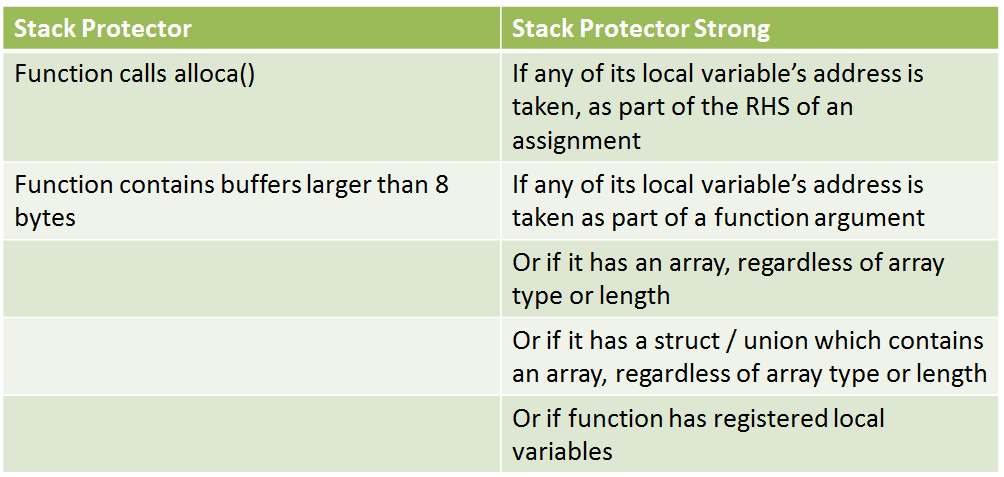
Because of these problems at Google they decided to develop a third switch, -fstack-protector-strong, covering more cases of vulnerable code without sacrificing performance. In figure 1 we can see a comparison between – fstack-protector and -fstack-protector-strong.
Fig. 1 – -fstack-protector vs. –fstack-protector-strong
Clearly a substantial improvement covering more types of possible vulnerabilities in code, but enough theory for today, let’s move on to a practical exercise where we will install the patch to the latest GCC 4.8.0 version, recently posted, on a Linux Debian 6.0.
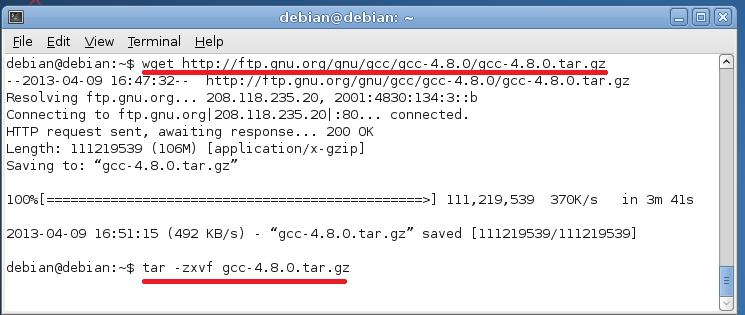
The first step is to download GCC version that we want to patch. The patch was written for version 4.6, although I have tested with versions 4.7 and 4.8 and it works correctly. So we run the command wget with GCC URL and then unzip it (see figure 2).
Fig. 2 – GCC Download
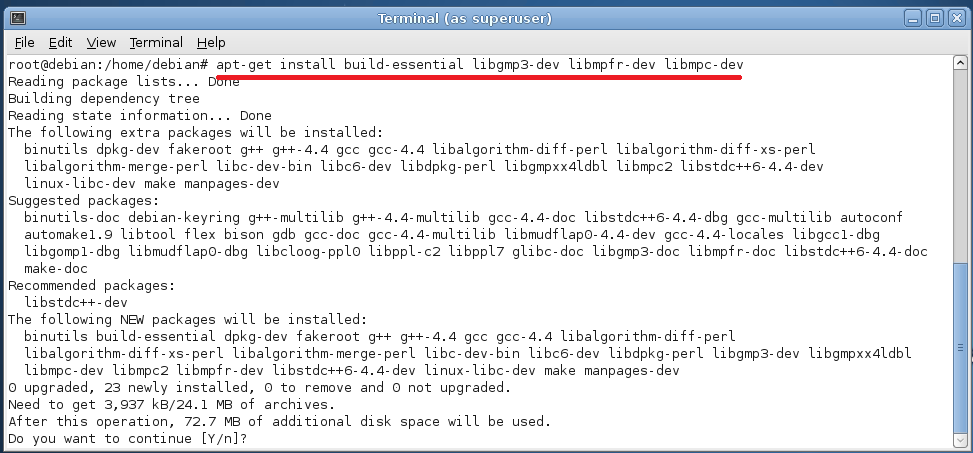
To compile GCC we must have the following libraries installed and to install them we will use the command apt-get (see figure 3):
Build-essential
libgmp3-dev
libmpfr-dev
libmpc-dev
zip
autogen
Fig. 3 – Installing required packages to compile GCC
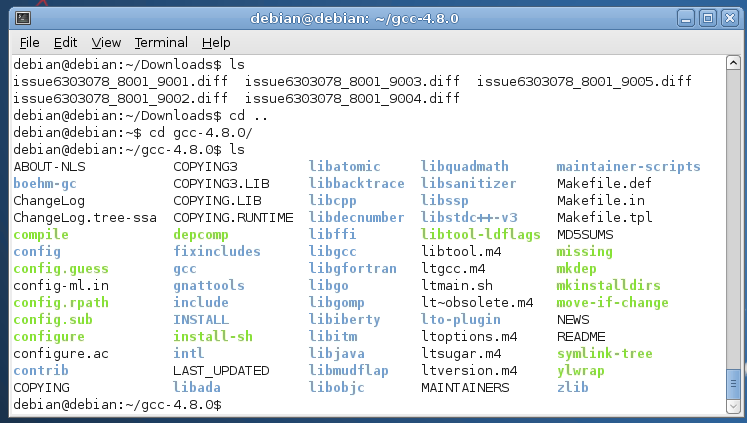
Now let’s download the -fstack-protector-strong patch from here. The patch is composed of 5 diff files.
Fig. 4 – Downloaded patches
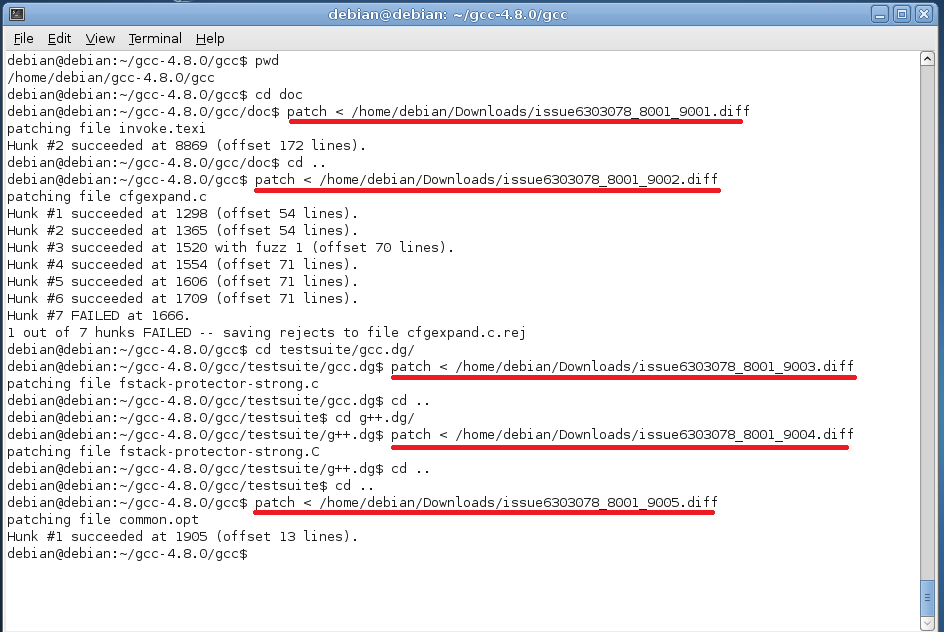
We then proceed to patch GCC and we must follow the order that is showed in figure 5. Pay special attention to the order of the directories within the GCC.
Fig. 5 – Applying patches to GCC
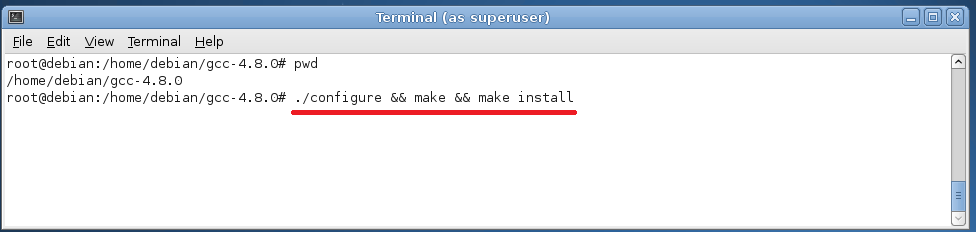
Once we have patched GCC we can compile it, for install it in the system we need to have root privileges (see figure 6). While the command is running you can read other articles on this blog since the process takes a while to complete :)
Fig.6- Compiling and installing GCC
Now we are ready to compile programs with the latest version of GCC and a better defense against buffer overflow vulnerabilities.
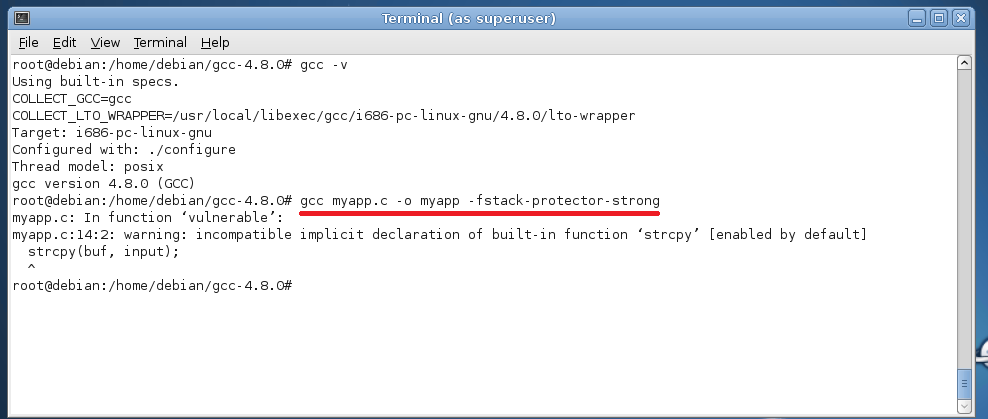
At figure 7 we compile a vulnerable program with the parameter -fstack-protector-strong.
Fig. 7 – Testing –fstack-protector-strong
When disassembling (reversing) myapp we can see that this defense has been applied to several functions that -fstack-protector would have not applied (although I leave this exercise for another article).
This patch is not currently in GCC by default but let us hope that it will be in future versions as well as new and better defenses.
It is true that there are attack vectors to bypass this protection, but all defenses are welcome when building software and currently all modern compilers (GCC, Visual Studio and LLVM) include a variety of defenses that programmers should always use.
No doubt the use of these defenses in compilers does not remove the need for developing secure software using a secure development framework such as the MS SDL or OpenSAMM.
Which security parameters do you use when compiling software?
If you like reverse engineering and want to learn all the secrets of IDA Pro, this is your book. This work written by Chris Eagle, a top expert on the subject, reveals the power of the best tool for reverse engineering. The IDA Pro, 2nd Edition (ISBN-13: 978-1593272890) along its 26 chapters describes how to use IDA Pro and all its options, as well as the decompiler, debugger and the emulator, and of course the development of scripts using IDC and Python (IDAPython) languages.
IDA Pro is a complex tool to analyze all types of binaries, but this book makes it easy for novices to learn and those who are already experts can benefit from reading it as well.
The advanced sections of extending IDA Pro using IDC or Python are priceless; the author includes many scripts very well explained. Personally I’m a big fan of Python so all the chapters related to IDAPython for me are the most interesting.
On the book website we can find more resources and a number of plugins for IDA Pro, of special interest the x86 Emulator plugin.
The code that the book analyzes is for x86 under Windows, but IDA Pro supports many more platforms such as ARM or binaries for Linux (ELF) and MacOS (Mach-o) among others.
Certainly a must-read for any cybersecurity professional where it is vital to possess the necessary skills to find vulnerabilities in software or analyze malware.
Score (1 rose, very bad / 5 roses, very good): 5 Roses (Mandatory Reading)